The Ola S1 Pro Gen 3 is one of the performance-focused electric scooters available in India. It combines a sporty design with a powerful mid-drive motor, large battery options, connected technology and a long claimed riding range.
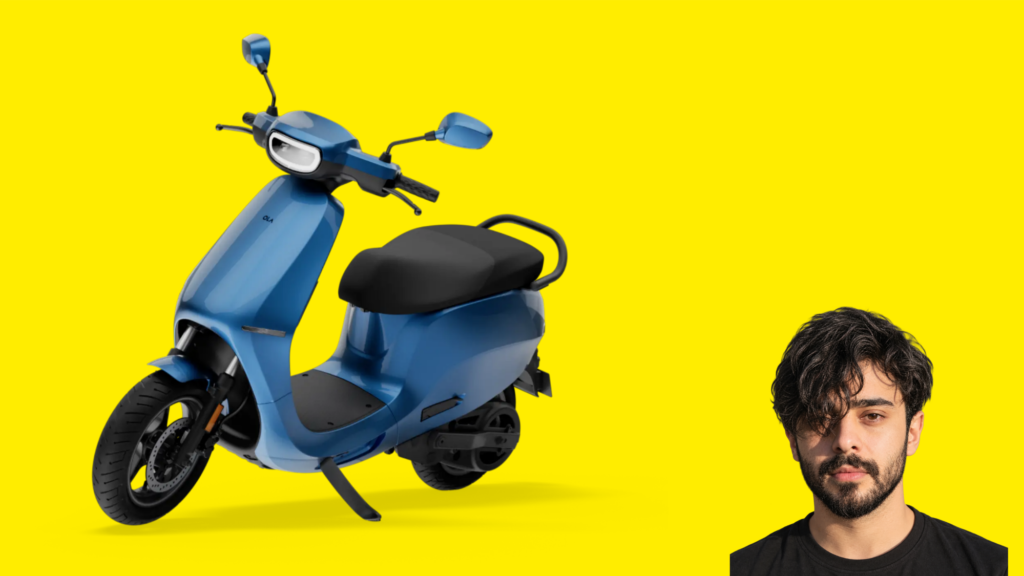
The S1 Pro Gen 3 is available with 3 kWh and 4 kWh battery options, while the more powerful S1 Pro+ sits above it in Ola’s premium lineup. The regular S1 Pro is aimed at buyers who want strong performance without moving to the more expensive Pro+ models.
Depending on the battery configuration, the S1 Pro can offer an IDC range of up to 242 km, a top speed of up to 125 km/h, and 0-40 km/h acceleration in around 2.7 seconds.
Ola S1 Pro Price in India
The Ola S1 Pro Gen 3 is available in two main battery configurations. Variant Battery IDC Range Top Speed Approx. Ex-Showroom Price* S1 Pro 3 kWh 3 kWh 176 km 117 km/h Around ₹1.30 lakh S1 Pro 4 kWh 4 kWh 242 km 125 km/h Around ₹1.50 lakh
*Prices can change because Ola frequently updates introductory prices, offers, subsidies and city-specific charges. Registration, insurance and other costs are additional.
For buyers who want a longer range, the 4 kWh version makes more sense, while the 3 kWh model is better suited to regular city commuting and a lower purchase budget.
Ola S1 Pro Battery Options
The S1 Pro Gen 3 comes with two battery capacities:
- 3 kWh
- 4 kWh
The battery size has a direct effect on the scooter’s claimed range.
The 3 kWh version is designed for riders who mostly travel within the city and do not require a very long range between charging sessions.
The 4 kWh version is more suitable for people who travel longer distances regularly. Its claimed IDC range is significantly higher, making it a better option for riders who want fewer charging stops.
As with every electric vehicle, actual range can be lower than the IDC figure depending on speed, riding mode, traffic, rider weight, road conditions, temperature and use of electrical features.
Ola S1 Pro Range
Range is one of the biggest reasons buyers consider the S1 Pro.
The current Gen 3 S1 Pro offers:
- 3 kWh: up to 176 km IDC range
- 4 kWh: up to 242 km IDC range
The 242 km figure is a certified test-cycle figure and should not be treated as the guaranteed everyday riding range.
In real-world conditions, riders may see a different result. Aggressive acceleration, high-speed riding and frequent use of performance modes can reduce the distance available from a full charge.
For normal city riding, using a more efficient riding mode can help maximise battery utilisation.
Motor and Performance
The S1 Pro Gen 3 uses a mid-drive electric motor rather than a conventional hub motor.
The motor produces up to 11 kW of peak power and is paired with a chain-drive system. Ola says the Gen 3 platform integrates the motor control unit with the motor system to improve packaging and efficiency.
The S1 Pro can accelerate from 0 to 40 km/h in about 2.7 seconds.
That makes it considerably quicker than many conventional petrol scooters used for everyday commuting.
Top Speed
The top speed depends on the battery configuration:
- S1 Pro 3 kWh: up to 117 km/h
- S1 Pro 4 kWh: up to 125 km/h
The 4 kWh version therefore offers stronger high-speed capability.
Although the scooter is capable of high speeds, riders should always follow local speed limits and road conditions.
Riding Modes
The S1 Pro Gen 3 offers multiple riding modes designed for different situations.
These include:
- Eco
- Normal
- Sports
- Hyper
Eco Mode
Eco mode prioritises efficiency and is useful when maximum range is more important than acceleration.
Normal Mode
Normal mode provides a balance between performance and energy consumption, making it suitable for everyday commuting.
Sports Mode
Sports mode provides a more responsive riding experience and is useful when quicker acceleration is required.
Hyper Mode
Hyper mode is designed for maximum performance. It uses more battery energy, so frequent use can reduce the practical riding range.
Ola S1 Pro Charging Time
Charging time depends on the battery configuration and charging equipment.
Ola lists approximately 4 hours 50 minutes for 0-80% charging for the S1 Pro variants under its specified charging setup.
Charging from a lower battery level can therefore take several hours, making overnight charging a convenient option for many users.
Before purchasing, buyers should check the exact charger and charging specifications included with their selected variant.
Home Charging
The S1 Pro is designed to be charged at home using compatible charging equipment.
For regular users, home charging is particularly convenient because the scooter can be connected after returning from work or daily travel and left to charge overnight.
This reduces the need to depend entirely on public charging infrastructure.
Electric Running Cost
One of the main advantages of the S1 Pro over a petrol scooter is the potential reduction in energy cost.
Electricity generally costs much less per kilometre than petrol when calculated using the energy consumed by the scooter and the price of petrol.
However, the actual running cost depends on:
- Local electricity tariff
- Charging losses
- Riding style
- Average speed
- Battery condition
- Daily distance
- Traffic conditions
Therefore, buyers should calculate their own cost using their local electricity rate rather than relying on a single nationwide figure.
Ola S1 Pro Design
The S1 Pro has a modern, futuristic design that is noticeably different from traditional petrol scooters.
Its smooth body panels, integrated lighting elements and minimalist appearance give it a premium electric-scooter look.
The Gen 3 model also gets design details such as:
- Body-coloured mirrors
- Two-tone seat
- Aluminium grab handle
- Rim decals
- Full chain cover
The design is aimed at riders who want a sporty and technology-focused scooter rather than a conventional commuter appearance.
Seat and Riding Comfort
The S1 Pro uses a conventional scooter-style seating position that makes it suitable for urban commuting.
The two-tone seat is designed to improve the visual appearance while providing a comfortable riding position.
The scooter can also be used with a pillion, although buyers who regularly carry a passenger should take a test ride before purchasing because comfort preferences can vary significantly between riders.
Suspension Setup
The S1 Pro Gen 3 uses a suspension setup designed for urban roads.
The front suspension uses telescopic elements, while the rear uses a monoshock arrangement.
This setup is intended to provide a balance between handling and everyday comfort.
Road conditions can make a significant difference, particularly on broken roads, potholes and uneven surfaces.
Braking System
Braking is an important area for a performance-oriented electric scooter.
The S1 Pro Gen 3 uses disc braking hardware, and the Gen 3 platform introduces electronically controlled braking technology.
Ola also highlights its brake-by-wire system, which is designed to electronically manage braking behaviour.
The exact braking and safety equipment can vary by model and configuration, so buyers should verify the equipment available on the specific scooter they are booking.
ABS and Safety Technology
One of the notable technologies associated with Ola’s Gen 3 premium S1 platform is electronically controlled anti-lock braking.
The S1 Pro range is positioned with safety-focused electronic systems alongside its performance features.
The scooter also benefits from connected software functions through Ola’s MoveOS ecosystem.
However, electronic safety systems do not replace safe riding. Proper braking technique, tyres, road awareness and protective riding gear remain important.
MoveOS 5 Technology
The S1 Pro Gen 3 is built around Ola’s connected software platform.
MoveOS brings several technology-oriented functions to the scooter.
Depending on configuration and software availability, features include:
- Connected vehicle functions
- Navigation-related features
- SOS alerts
- Road Trip functions
- Ride information
- Vehicle diagnostics
- Software updates
- Multiple riding modes
- Multi-mode traction control features on applicable models
Software-based features can change over time as Ola releases updates, so the exact feature list may differ between software versions.
Multi-Mode Traction Control
Traction management is particularly useful on a powerful electric scooter because electric motors can deliver torque very quickly.
Ola’s newer S1 platform introduces multi-mode traction control technology on applicable models.
Such systems are intended to help manage wheel slip under certain riding conditions.
The feature can be useful when accelerating on surfaces where available grip is limited, although it cannot eliminate all traction-related risks.
Digital Display and Connectivity
The S1 Pro follows Ola’s technology-heavy approach with a digital instrument system.
The display provides important information such as:
- Speed
- Battery level
- Riding mode
- Range information
- Trip information
- Navigation-related information
- Connected functions
The scooter is designed to work with Ola’s connected ecosystem, allowing riders to access additional information and functions through supported software and smartphone integration.
Storage Space
Storage is an important consideration for scooter buyers.
The S1 Pro provides under-seat storage for everyday items, although storage capacity is not the only factor that matters.
Users should check whether their helmet, rain gear, charging accessories or other regular items fit comfortably before buying.
If storage is a major priority, physically checking the boot space during a showroom visit is recommended.
Wheels and Tyres
The S1 Pro Gen 3 uses 12-inch wheels, which provide a good balance between manoeuvrability and road stability.
The larger wheel size compared with some smaller scooters can help the scooter feel more planted during everyday riding.
Tyre grip remains important, particularly because the S1 Pro can reach relatively high speeds for an electric scooter.
Ground Clearance and Dimensions
The S1 Pro has dimensions designed around typical Indian urban use.
Key figures include approximately:
- Length: 1,900 mm
- Width: 850 mm
- Height: 1,288 mm
- Wheelbase: 1,359 mm
- Seat height: around 791 mm
- Ground clearance: around 160 mm
The ground clearance should be adequate for many urban roads, but riders should still slow down for large speed breakers and damaged surfaces.
Kerb Weight
The weight varies according to the battery version.
The lighter 3 kWh version is easier to handle at low speeds and while moving the scooter manually.
The larger battery version is heavier, but the additional battery capacity provides a significant advantage in terms of claimed range.
Battery size should therefore be selected according to usage rather than simply choosing the largest available option.
Ola S1 Pro Colours
Ola offers the S1 range in multiple colour choices, including options such as:
- Passion Red
- Jet Black
- Midnight Blue
- Stellar Blue
- Porcelain White
- Silver
Availability can vary by model, finish and location.
The company also offers different colour and finish choices across its wider S1 portfolio.
Warranty
Warranty coverage is an important part of the ownership decision for an electric scooter because the battery is one of the most expensive components.
Ola currently lists a 3-year/40,000 km battery warranty for the S1 Pro configurations shown on its product page.
Additional warranty and extended warranty packages may also be available.
Before purchasing, buyers should carefully check the warranty terms for:
- Battery
- Motor
- Charger
- Electronics
- Other major components
The exact terms and optional extended plans should be confirmed at the time of purchase.
Maintenance
Electric scooters generally have fewer mechanical components than petrol scooters.
The S1 Pro does not require regular engine oil changes, spark-plug replacement or conventional engine servicing.
However, EV ownership still involves maintenance.
Owners should pay attention to:
- Tyre pressure
- Brake condition
- Suspension
- Bearings
- Electrical systems
- Charging equipment
- Software
- Battery health
- General body and chassis condition
Regular inspection is particularly important for riders covering high monthly kilometres.
Ola HyperService
Ola has developed its HyperService network around its electric scooter range.
Depending on location and service availability, owners may have access to options such as doorstep service and pickup-and-drop service.
Service availability can differ between cities, so buyers should check the nearest Ola service facility before purchasing.
S1 Pro 3 kWh vs 4 kWh
Choosing between the two regular S1 Pro versions mainly comes down to range requirements and budget. Feature S1 Pro 3 kWh S1 Pro 4 kWh Battery 3 kWh 4 kWh IDC Range 176 km 242 km Top Speed 117 km/h 125 km/h Peak Power 11 kW 11 kW 0-40 km/h 2.7 sec 2.7 sec Best For City commuting Longer daily travel Price Lower Higher
The 4 kWh version is the better choice for riders who frequently travel long distances.
The 3 kWh version can be a sensible option if most daily journeys are relatively short and the buyer wants to reduce the initial purchase price.
Is Ola S1 Pro Good for Daily Use?
Yes, the S1 Pro can be suitable for daily commuting, especially for riders who want strong acceleration and modern technology.
The 3 kWh model is more appropriate for shorter urban trips, while the 4 kWh model provides greater flexibility for longer commutes.
The scooter is particularly attractive to buyers who want:
- High performance
- Electric power
- Low routine mechanical maintenance
- Connected features
- A modern design
- A relatively long claimed range
However, buyers should also consider local charging access and Ola’s service availability before making a decision.
Is Ola S1 Pro Suitable for Long Distance Riding?
The S1 Pro can handle longer trips better than many low-range electric scooters, particularly in its 4 kWh configuration.
Its claimed IDC range of up to 242 km gives it a strong theoretical range advantage.
However, long-distance EV travel requires more planning than petrol travel because actual range varies with speed and charging availability.
For highway or intercity use, riders should plan charging stops and maintain a safety margin rather than riding until the battery becomes critically low.
Ola S1 Pro vs Petrol Scooter
The biggest difference is the powertrain.
A petrol scooter requires fuel and periodic engine maintenance, while the S1 Pro uses electricity and has a much simpler mechanical powertrain.
Advantages of the S1 Pro
- Lower energy cost per kilometre in many situations
- No engine oil changes
- Instant electric acceleration
- Quiet operation
- Connected technology
- High top speed
- Multiple riding modes
- No conventional exhaust emissions during operation
Things to Consider
- Charging time is much longer than petrol refuelling
- Actual range depends heavily on riding conditions
- Battery replacement can be expensive outside warranty
- Charging access matters for apartment and long-distance users
- Service experience can vary by location
Who Should Buy the Ola S1 Pro?
The S1 Pro is worth considering if you want a performance-oriented electric scooter rather than a basic low-speed commuter.
The 3 kWh version makes more sense for:
- Short daily commutes
- City users
- Buyers with a limited budget
- Riders who can charge regularly at home
The 4 kWh version is better suited to:
- Longer daily commuting
- Riders who want more range
- Frequent intercity travel
- Buyers who prefer stronger top-speed capability
Things to Check Before Buying
Before booking an Ola S1 Pro, buyers should check the following:
- Take a proper test ride.
- Check the real seating comfort.
- Test the scooter with a pillion if required.
- Confirm the exact battery capacity.
- Check the current ex-showroom price and available offers.
- Ask for the final on-road price.
- Check registration and insurance costs.
- Confirm the charging equipment included.
- Check the nearest service centre.
- Understand the battery warranty.
- Ask about extended warranty options.
- Check the current software features.
- Compare the 3 kWh and 4 kWh versions based on your daily distance.
- Do not choose a battery size only because of the maximum IDC range figure.
Frequently Asked Questions
What is the Ola S1 Pro price in India?
The S1 Pro Gen 3 starts at around ₹1.30 lakh for the 3 kWh version, while the 4 kWh version is around ₹1.50 lakh before applicable on-road charges and depending on current offers.
What is the Ola S1 Pro range?
The S1 Pro offers a claimed IDC range of up to 176 km with the 3 kWh battery and up to 242 km with the 4 kWh battery.
What is the top speed of the Ola S1 Pro?
The 3 kWh version can reach up to 117 km/h, while the 4 kWh version can reach up to 125 km/h.
How fast is the Ola S1 Pro?
The S1 Pro can accelerate from 0 to 40 km/h in approximately 2.7 seconds.
Does the Ola S1 Pro have a removable battery?
The S1 Pro’s main battery is not designed as a conventional user-removable battery. Charging is carried out using the scooter’s charging system.
How long does the Ola S1 Pro take to charge?
Ola lists approximately 4 hours 50 minutes for 0-80% charging for the S1 Pro configurations under its specified charging setup.
Is the Ola S1 Pro good for city riding?
Yes. Its automatic transmission, instant electric torque, riding modes and connected features make it well suited to urban commuting.
Is the Ola S1 Pro expensive to maintain?
Routine maintenance can be lower than a petrol scooter because there is no engine oil or conventional engine service. However, tyres, brakes, suspension, electronics and battery-related components still require attention.
Which S1 Pro variant should I buy?
For shorter daily commuting, the 3 kWh version can be sufficient. If you travel longer distances regularly, the 4 kWh version is the more practical choice because of its higher claimed range.
Ola S1 Pro Pros and Cons
Pros
- Strong electric performance
- Up to 125 km/h top speed
- Up to 242 km IDC range
- Quick 0-40 km/h acceleration
- Multiple riding modes
- Mid-drive motor
- Modern connected technology
- 12-inch wheels
- No conventional engine maintenance
Cons
- Real-world range will be lower than the IDC figure
- Charging takes significantly longer than petrol refuelling
- Larger battery versions cost more
- Service and charging convenience depends on location
- Battery replacement can be expensive outside warranty
Final Verdict
The Ola S1 Pro Gen 3 is aimed at riders who want an electric scooter with considerably more performance than a basic city commuter.
Its biggest strengths are the powerful mid-drive motor, quick acceleration, high top speed, multiple riding modes and large battery options. The 4 kWh version is particularly attractive for buyers who need more range for daily travel.
The 3 kWh model, meanwhile, can make more sense for city users who have a predictable daily commute and regular access to home charging.
The most important point is to choose the scooter based on your actual daily distance, charging availability and local service support rather than relying only on the advertised IDC range.
Overall, the S1 Pro Gen 3 is a strong option for buyers looking for a fast, feature-rich and technology-focused electric scooter for Indian roads.
Important Information
Prices, offers, specifications, software features and warranty terms can change over time. Buyers should verify the final price and configuration with Ola Electric before placing an order.
This article has been written independently in original wording for informational and automotive research purposes. Ola, S1 Pro, S1 Pro+, MoveOS and related names are trademarks or product names belonging to their respective owners.