The Ola S1 Air was introduced as a more affordable alternative to the premium Ola S1 Pro electric scooter. It was designed for buyers who wanted the styling, technology and convenience of an Ola electric scooter without paying for the higher performance of the S1 Pro.
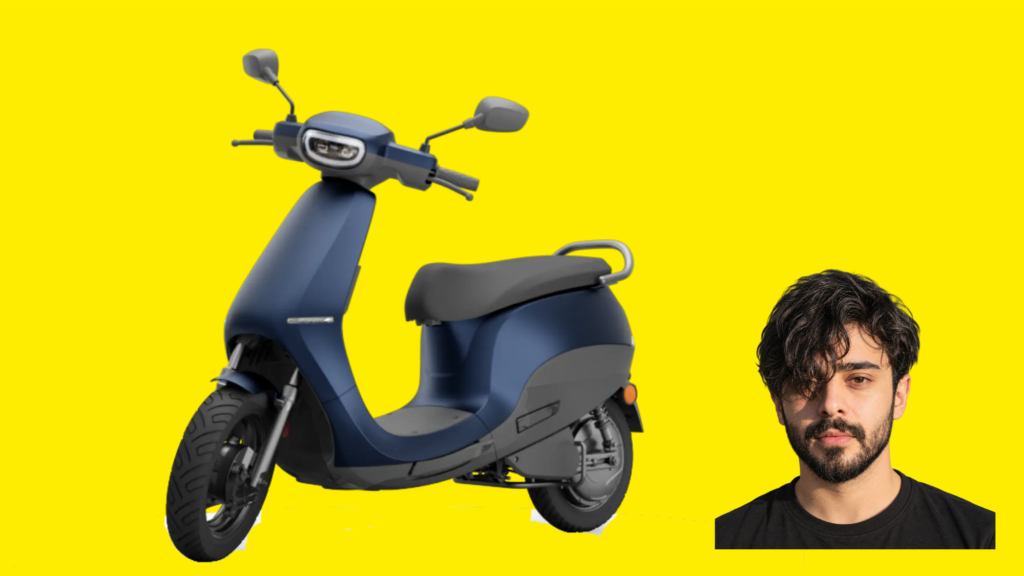
The S1 Air came with a 3 kWh battery, a 6 kW peak-power electric motor, a claimed 151 km IDC range and a 90 km/h top speed.
Although the S1 Air was an important model in Ola Electric’s earlier scooter lineup, buyers should note that it is not part of Ola Electric’s current main S1 portfolio for new purchases. The company has since shifted its focus toward newer-generation models such as the S1 X, S1 X+, S1 Pro and S1 Pro+.
For someone considering a used S1 Air, however, its specifications, battery condition, service availability and remaining warranty are still important.
Ola S1 Air Price in India
When the S1 Air was sold as a new scooter, its price changed over time depending on the variant, location and offers.
Ola had listed the S1 Air at around ₹1.07 lakh ex-showroom during one of its official sales periods.
The actual on-road price was higher after adding registration, insurance and other applicable charges.
Because the S1 Air is no longer a current mainstream new-sale model, there is no single current ex-showroom price that should be used for a new purchase.
For buyers looking at a used S1 Air, the price depends heavily on:
- Manufacturing year
- Battery health
- Kilometres ridden
- Remaining warranty
- Scooter condition
- Insurance status
- City
- Previous service history
Ola S1 Air Battery
The S1 Air was equipped with a 3 kWh lithium-ion battery pack.
The battery provided the energy required to power the electric motor and onboard electronics.
Unlike a removable-battery scooter, the S1 Air’s main battery was integrated into the scooter.
Battery health is particularly important when purchasing a used electric scooter because the battery is one of the most expensive components of an EV.
A used S1 Air buyer should therefore check:
- Current battery health
- Maximum available range
- Charging behaviour
- Battery warranty
- Error messages
- Charging history, if available
- Service records
Ola S1 Air Range
The S1 Air was officially rated for up to 151 km of IDC range.
IDC range is a certified test-cycle figure and should not be interpreted as the guaranteed real-world distance.
Actual range can vary depending on:
- Riding speed
- Traffic
- Rider weight
- Road conditions
- Temperature
- Riding mode
- Tyre pressure
- Acceleration
- Battery condition
A scooter that has travelled several years may also deliver a different range from a new vehicle because battery capacity can gradually change with usage and age.
Real-World Range
The real-world range of the S1 Air can be lower than its 151 km certified figure.
Smooth city riding at moderate speeds generally consumes less energy than aggressive acceleration and high-speed riding.
For a used S1 Air, battery condition becomes an additional factor.
Two scooters of the same model and year can therefore provide different real-world ranges depending on their usage history.
Ola S1 Air Motor
The S1 Air uses a 6 kW peak-power electric motor.
The motor was designed to provide sufficient performance for everyday urban riding while consuming less energy than the more powerful S1 Pro.
Electric motors deliver torque quickly, which gives the S1 Air a responsive feel when accelerating from a standstill.
Ola S1 Air Performance
The S1 Air was capable of accelerating from 0 to 40 km/h in around 3.3 seconds.
This is more than enough for normal city commuting and provides quick acceleration away from traffic lights.
The scooter was not designed to compete directly with the high-performance S1 Pro. Instead, its focus was a combination of practical urban performance, efficiency and affordability.
Ola S1 Air Top Speed
The official top speed of the S1 Air is approximately 90 km/h.
This makes it suitable for most urban roads and many city commuting situations.
However, riders should always follow local speed limits and adjust speed according to traffic and road conditions.
Ola S1 Air Riding Modes
The S1 Air offered multiple riding modes, including:
- Eco
- Normal
- Sports
Eco Mode
Eco mode focuses on efficiency and is useful when the rider wants to maximise battery range.
Normal Mode
Normal mode provides a balance between performance and energy consumption and is suitable for everyday commuting.
Sports Mode
Sports mode provides quicker throttle response and stronger acceleration but can consume more battery energy.
Ola S1 Air Charging Time
The S1 Air had a charging time of approximately 6.5 hours under the specified charging conditions.
This means overnight charging is generally the most convenient approach for owners.
Unlike filling a petrol scooter, EV charging requires considerably more time, but users can charge the scooter while it is parked at home.
Charging time can vary depending on battery state, charger specifications, temperature and other conditions.
Home Charging
Home charging is one of the most important parts of S1 Air ownership.
A user with a dedicated parking space and an appropriate electrical connection can charge the scooter at home after daily use.
For apartment residents, it is important to check whether a suitable power connection is available near the parking area before purchasing an electric scooter.
Ola S1 Air Design
The S1 Air has the familiar rounded and minimalist design associated with Ola’s early S1 family.
Its smooth body panels, integrated lighting and simple silhouette give it a modern appearance.
Compared with conventional petrol scooters, the design is noticeably more futuristic.
The scooter was intended to appeal to riders who wanted an electric vehicle that looked modern without adopting an extremely aggressive or sporty design.
Seat and Comfort
The S1 Air uses a long scooter-style seat designed for everyday rider and pillion use.
The upright riding position is suitable for city commuting.
Seat comfort can depend on rider height and personal preference, so a test ride is recommended when purchasing a used S1 Air.
For regular two-person use, buyers should also check the condition of the seat foam and grab area on a second-hand scooter.
Ola S1 Air Display
One of the S1 Air’s notable features was its 7-inch touchscreen display.
The large screen gave the scooter a more premium technology experience compared with conventional scooters.
The display could provide information such as:
- Speed
- Battery percentage
- Estimated range
- Riding mode
- Trip information
- Navigation-related information
- Connected functions
The touchscreen was one of the major technology features that helped differentiate the S1 Air from more basic electric scooters.
Ola MoveOS Features
The S1 Air was part of Ola’s connected scooter ecosystem and supported MoveOS features.
Depending on the software version, features could include:
- Navigation
- Connected vehicle information
- Music and entertainment functions
- Ride statistics
- Vehicle diagnostics
- Software updates
- Safety-related functions
- Smartphone connectivity
The available features can change with software updates.
For a used S1 Air, buyers should check whether the scooter is running the latest compatible software.
Cruise Control
Cruise-control functionality was one of the technology-oriented features associated with Ola’s S1 family.
When available and used under suitable road conditions, cruise control can reduce the need to continuously hold the throttle at a steady speed.
It should only be used where permitted and where traffic conditions make it safe.
Reverse Mode
Reverse mode is useful when manoeuvring the scooter in tight parking areas.
Because electric scooters can be relatively heavy, having electronic assistance while moving backward can make parking easier.
The exact operation and availability can depend on the software version installed on the scooter.
Ola S1 Air Storage Space
The S1 Air provides useful under-seat storage for everyday items.
Storage is important for scooter users who regularly carry:
- Small bags
- Rain gear
- Charging accessories
- Personal items
- Other everyday belongings
Before purchasing a used scooter, the storage compartment should be checked for water ingress, damage or modifications.
Braking System
The S1 Air uses disc braking hardware and electronic braking assistance.
Braking performance depends on:
- Brake-pad condition
- Disc condition
- Tyre grip
- Road surface
- Rider input
A used S1 Air should be inspected carefully for brake wear before purchase.
Suspension Setup
The S1 Air uses a conventional scooter suspension arrangement.
The front uses twin telescopic suspension, while the rear uses a dual-shock setup.
This arrangement was chosen to provide a balance between ride comfort and cost.
On pothole-filled roads, riders should still reduce speed because suspension cannot completely eliminate the impact of large road defects.
Wheels and Tyres
The S1 Air uses scooter-sized wheels designed for urban riding.
Tyre condition is particularly important because electric motors can provide instant torque.
When purchasing a used S1 Air, check:
- Tyre tread
- Cracks
- Uneven wear
- Manufacturing date
- Air pressure
- Wheel alignment
Replacing old tyres can add to the initial ownership cost of a second-hand scooter.
Ola S1 Air Dimensions
The S1 Air was designed around the dimensions of a conventional urban scooter.
Its overall size makes it practical for:
- City roads
- Residential areas
- Shopping areas
- Office commuting
- Everyday urban parking
Its relatively compact scooter layout also makes it easier to manoeuvre through traffic than a motorcycle.
Ola S1 Air Weight
The S1 Air’s integrated battery contributes significantly to its overall weight.
As with most electric scooters, the battery is one of the heavier components.
The weight can be noticeable when moving the scooter manually in a parking area, particularly on an incline.
Ola S1 Air Colours
The S1 Air was offered in several colour choices during its sales period.
Depending on the production batch, colours included options such as:
- Coral Glam
- Liquid Silver
- Jet Black
- Porcelain White
- Neo Mint
- Marshmallow
Colour availability depended on the specific model year and production batch.
Used-scooter buyers should also check whether the body panels are original or have been replaced after an accident.
Ola S1 Air Warranty
Warranty coverage depended on the purchase date and applicable Ola warranty terms.
For a used S1 Air, the most important question is not simply whether the original model had a warranty, but whether any warranty is still active on the particular scooter.
Buyers should verify:
- Vehicle warranty
- Battery warranty
- Charger warranty
- Warranty transfer conditions
- Service history
The remaining battery warranty can be particularly valuable because battery replacement can be expensive.
Ola S1 Air Maintenance
An electric scooter has fewer conventional mechanical parts than a petrol scooter.
The S1 Air does not require traditional engine-related maintenance such as:
- Engine oil changes
- Spark-plug replacement
- Engine air-filter replacement
- Exhaust maintenance
- Clutch servicing
However, it still requires maintenance of:
- Brakes
- Tyres
- Suspension
- Bearings
- Electrical systems
- Charging equipment
- Battery system
- Software
Regular inspection is important for long-term reliability.
Used Ola S1 Air: What Should You Check?
Because the S1 Air is an older model compared with Ola’s latest scooters, this section is particularly important for second-hand buyers.
1. Battery Health
Ask the seller to charge the scooter fully and check the displayed range.
Do not rely only on the percentage shown on the dashboard.
2. Charging Test
Connect the charger and confirm that charging begins normally.
Check for unusual heating, error messages or intermittent charging.
3. Service History
Ask for service invoices or digital service records.
4. Accident Damage
Inspect:
- Front apron
- Handlebar
- Fork
- Floorboard
- Side panels
- Rear body
- Wheels
5. Tyres
Old tyres may require replacement even if tread appears acceptable.
6. Brake Condition
Check both braking performance and unusual noises.
7. Software
Confirm that the scooter boots normally and that its connected features work.
8. Charger
Make sure the original compatible charger is included.
Replacing charging equipment can add unnecessary expense.
Ola S1 Air Running Cost
The S1 Air can be significantly cheaper to run than a petrol scooter in terms of energy consumption.
The exact cost depends on the electricity tariff and the scooter’s actual energy efficiency.
For example, if a scooter uses around 3 kWh of electricity for a particular amount of travel, the energy cost can be calculated by multiplying that electricity consumption by the local per-unit electricity rate.
Charging losses should also be considered for a more accurate calculation.
Ola S1 Air vs Petrol Scooter
The S1 Air’s biggest advantage over a petrol scooter is its electric powertrain.
Advantages
- No engine oil
- Quiet operation
- Instant electric acceleration
- Potentially lower energy cost
- Fewer conventional engine components
- Large digital display
- Connected features
- No tailpipe emissions during operation
Things to Consider
- Charging takes much longer than refuelling
- Battery condition is important
- Charging infrastructure matters for long-distance travel
- Older S1 Air examples may have reduced battery capacity
- Service support should be checked before buying a used unit
Ola S1 Air vs Ola S1 Pro
The S1 Air and S1 Pro were positioned differently within Ola’s earlier portfolio. Feature Ola S1 Air Ola S1 Pro Battery 3 kWh 4 kWh in the relevant generation IDC Range 151 km Up to 195 km Peak Power 6 kW 11 kW Top Speed 90 km/h Up to 120 km/h Riding Modes Eco, Normal, Sports Eco, Normal, Sports, Hyper Positioning More affordable Premium/performance
The S1 Pro offered stronger performance and a larger battery, while the S1 Air was designed as a more accessible option.
Is Ola S1 Air Good for Daily Use?
For city commuting, the S1 Air can still be a practical electric scooter if the particular unit has a healthy battery and reliable service support.
Its 90 km/h top speed is sufficient for most urban commuting.
The 151 km IDC range was also competitive when the scooter was launched.
However, someone buying a used S1 Air today should focus more on battery health and remaining warranty than the original claimed range.
Is Ola S1 Air Good for Long-Distance Riding?
The S1 Air can handle longer journeys better than very low-range electric scooters, but it was primarily designed around urban use.
Long-distance riders need to consider:
- Actual range
- Charging locations
- Battery age
- Charging time
- Service availability
An older battery may deliver considerably less range than when the scooter was new.
For regular intercity travel, a newer Ola model with a larger battery may be more appropriate.
Who Should Consider a Used Ola S1 Air?
A used S1 Air can make sense for buyers who:
- Want an affordable electric scooter
- Mostly travel within a city
- Have home charging access
- Find a well-maintained example
- Can verify battery health
- Have a nearby Ola service facility
- Want a large touchscreen display
It is less attractive if:
- The battery has significantly degraded
- The charger is missing
- Service support is far away
- The scooter has a history of repeated faults
- The asking price is close to a newer EV
Things to Check Before Buying
Before buying a used Ola S1 Air, check these points:
- Verify the registration details.
- Check the manufacturing year.
- Inspect battery health.
- Perform a charging test.
- Check the original charger.
- Test all riding modes.
- Check the touchscreen.
- Test reverse mode if available.
- Check brakes.
- Inspect tyres.
- Check suspension.
- Look for accident damage.
- Verify service history.
- Check remaining battery warranty.
- Confirm the nearest Ola service facility.
- Take a proper test ride.
- Compare its price with newer electric scooters before finalising the deal.
Frequently Asked Questions
What was the Ola S1 Air price in India?
The S1 Air was sold at different prices during its lifecycle. Ola officially listed it at around ₹1.07 lakh ex-showroom during one of its purchase periods.
Is the Ola S1 Air still available as a new scooter?
The S1 Air is not part of Ola Electric’s current main S1 lineup for new purchases. Ola has moved its current portfolio toward newer models.
What was the Ola S1 Air battery capacity?
The S1 Air used a 3 kWh battery.
What was the Ola S1 Air range?
The official IDC range was 151 km.
What was the Ola S1 Air top speed?
The S1 Air had a top speed of approximately 90 km/h.
What was the peak power of the S1 Air?
The electric motor produced 6 kW of peak power.
How fast could the Ola S1 Air accelerate?
The S1 Air could accelerate from 0 to 40 km/h in approximately 3.3 seconds.
Did the Ola S1 Air have a touchscreen?
Yes. The S1 Air was equipped with a 7-inch touchscreen display.
How long did the Ola S1 Air take to charge?
The published specification indicated approximately 6.5 hours of charging time under the specified conditions.
Is a used Ola S1 Air worth buying?
It can be worth considering if the battery is healthy, the charger is included, the scooter has a good service history and the price is significantly lower than newer alternatives.
Ola S1 Air Pros and Cons
Pros
- 151 km IDC range
- 6 kW peak motor
- 90 km/h top speed
- 3 kWh battery
- 7-inch touchscreen
- Multiple riding modes
- Modern electric-scooter design
- Quiet operation
- Lower routine mechanical maintenance than a petrol scooter
Cons
- No longer part of Ola’s current main new-scooter lineup
- Real-world range is lower than the IDC figure
- Charging takes several hours
- Older used examples may have battery degradation
- Battery replacement can be expensive
- Service and parts availability should be checked carefully
- Newer Ola models offer more advanced hardware
Final Verdict
The Ola S1 Air was an important step in Ola Electric’s early premium scooter lineup. With a 3 kWh battery, 6 kW motor, 151 km IDC range, 90 km/h top speed and 7-inch touchscreen, it offered a combination of performance and technology aimed at everyday Indian riders.
Today, however, the S1 Air should mainly be considered as a used electric scooter, rather than a current new-model purchase.
For someone buying a second-hand S1 Air, battery health is the single most important factor. A well-maintained scooter with a healthy battery, original charger and good service history can still be useful for city commuting.
If the price difference between a used S1 Air and a newer-generation Ola scooter is small, comparing both options carefully is advisable because newer models can provide updated hardware, software, warranty coverage and service support.
Important Information
The Ola S1 Air’s price and specifications mentioned in this article refer to its official sales period and published specifications. The model is not part of Ola Electric’s current main new-scooter lineup. Used-vehicle prices vary by city, condition, age, battery health and warranty status.
This article is independently written in original wording for informational and automotive research purposes. Ola Electric, S1 Air, S1 and MoveOS are trademarks or product names belonging to their respective owners.