The TVS Orbiter is an electric scooter designed primarily for everyday urban commuting. Instead of focusing only on high performance, TVS has developed the Orbiter around practical requirements such as usable range, comfortable seating, large storage space, connected features and relatively low running costs.
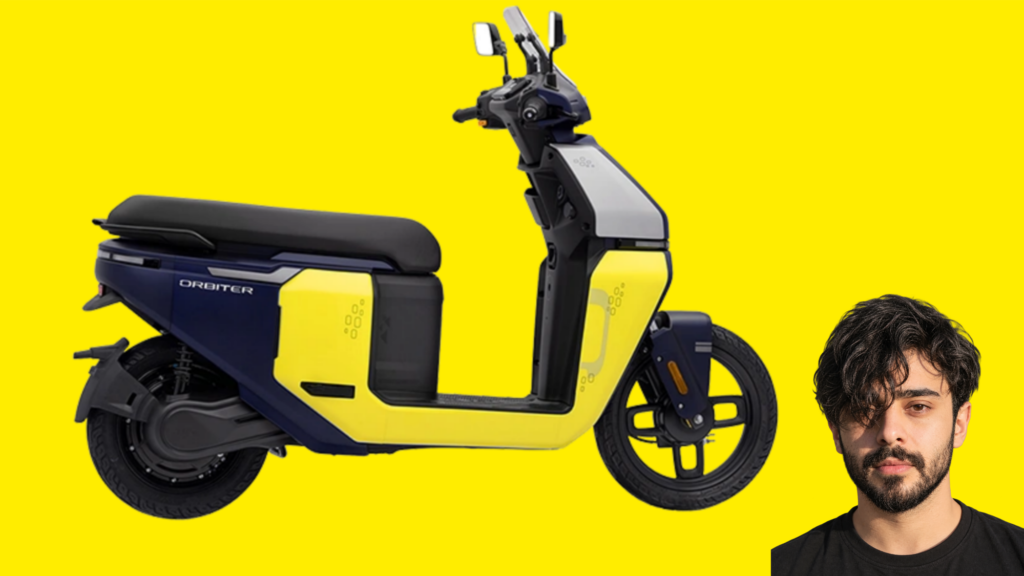
The scooter is available in two main variants, TVS Orbiter V1 and TVS Orbiter V2. The biggest difference between them is the battery capacity and claimed range. The V1 uses a 1.8 kWh battery, while the V2 gets a larger 3.1 kWh battery and a claimed IDC range of up to 158 km.
For buyers looking for a practical electric scooter for office travel, college commuting, shopping and regular city use, the Orbiter is an interesting option in the affordable EV segment.
TVS Orbiter Price in India
The current effective ex-showroom price varies according to the variant, city, applicable subsidy and other charges.
According to TVS Motor’s current pricing information: Variant Battery Claimed IDC Range Effective Ex-Showroom Price* TVS Orbiter V1 1.8 kWh 92 km ₹99,900* TVS Orbiter V2 3.1 kWh 158 km ₹1,09,830*
*The effective price shown by TVS includes applicable PM E-Drive benefits in the referenced pricing example. Actual on-road pricing can vary by state, city, insurance, registration, taxes and other applicable charges.
TVS also offers a Battery as a Service (BaaS) option for eligible Orbiter models, which can reduce the initial purchase cost by separating part of the battery cost from the upfront vehicle price.
TVS Orbiter V1 vs V2
The two variants share the same basic scooter concept, but their battery capacities and range are different. Specification Orbiter V1 Orbiter V2 Battery Capacity 1.8 kWh 3.1 kWh Claimed IDC Range 92 km 158 km Standard Charger 650 W 650 W 0–80% Charging Approx. 2 hr 20 min Approx. 4 hr 10 min Motor BLDC BLDC Peak Power 2.5 kW 2.5 kW Storage 34 litres 34 litres Wheel Setup 14-inch front / 12-inch rear 14-inch front / 12-inch rear
The V1 is aimed at buyers who mainly ride shorter daily distances and want a lower initial price. The V2 makes more sense for riders who regularly travel longer distances and want to reduce charging frequency.
Battery and Motor
The TVS Orbiter uses a Lithium-ion battery and a BLDC hub motor. The motor has a rated output of 1.8 kW and a peak power figure of 2.5 kW.
The battery is not designed to be removed by the owner. TVS states that the battery system is continuously monitored through the vehicle’s electronic systems and recommends using the approved charger and charging setup.
The battery system is rated IP67 for water and dust resistance, providing an additional layer of protection for normal everyday conditions.
TVS Orbiter Range
Range is one of the main reasons to consider the Orbiter.
- Orbiter V1: up to 92 km IDC range
- Orbiter V2: up to 158 km IDC range
These are IDC/test-cycle figures, not a guarantee of the exact distance every rider will achieve.
Actual range can change depending on riding speed, traffic, rider and passenger weight, road conditions, tyre pressure, temperature, riding mode and use of electrical systems.
For daily city riding, the V2’s larger battery provides a significant advantage because the rider does not need to recharge as frequently.
Charging Time
With the standard 650W charger, TVS lists the following approximate 0–80% charging times:
- V1: around 2 hours 20 minutes
- V2: around 4 hours 10 minutes
TVS also lists an optional 950W charger, which can reduce the 0–80% charging time to approximately 1 hour 24 minutes for the V1 and 2 hours 38 minutes for the V2.
The scooter can be charged at home, making overnight charging convenient for many users.
Performance
The Orbiter uses a low-noise BLDC hub motor with a peak power output of 2.5 kW.
TVS lists two primary riding modes:
- Eco
- City
The scooter also includes forward and reverse parking assistance, which can be useful when manoeuvring the vehicle in tight parking areas.
The official specifications list acceleration from 0–40 km/h at around 6.8 seconds for the current specification sheet.
The Orbiter is not designed as a high-performance electric scooter. Its performance is better understood as being suitable for regular urban transportation.
Hill Riding Capability
The Orbiter has a claimed gradeability of 7 degrees with a payload of up to 150 kg.
This means it can handle normal urban slopes, flyovers and moderate inclines, although actual performance on a hill depends on the rider’s weight, passenger load, battery level and road conditions.
Design and Comfort
TVS has given the Orbiter a simple, modern design rather than an overly aggressive appearance.
The scooter gets:
- LED lighting
- Long seat
- Upright riding position
- Straight-line footboard
- Large front wheel
- Alloy wheels
- Practical body proportions
The seat length is approximately 845 mm, while the seat height is around 763 mm in the current specification information.
The relatively large front wheel is intended to improve stability and make the scooter more comfortable over uneven city roads.
14-Inch Front Wheel
One of the practical highlights of the TVS Orbiter is its 14-inch front alloy wheel.
The front tyre specification is 90/80-14, while the rear uses a 90/90-12 tyre.
Larger front wheels can help the scooter feel more stable when travelling over potholes, broken patches and uneven surfaces. However, tyre pressure and riding speed still play an important role in ride comfort and safety.
34-Litre Boot Space
Storage is another strong point of the Orbiter.
TVS provides approximately 34 litres of under-seat storage, which is large enough for carrying everyday items and, depending on helmet size and shape, can accommodate two helmets according to TVS’s product information.
For people who frequently carry shopping bags, rain gear, documents or other daily-use items, this storage capacity can be more useful than purely cosmetic features.
Display and Connectivity
The TVS Orbiter comes with a 5.5-inch colour LCD connected instrument cluster.
The connected system can provide features such as:
- Turn-by-turn navigation
- Bluetooth connectivity
- Incoming call information
- Distance-to-empty information
- OTA updates
- Trip information
- Vehicle status
- Live vehicle location
- Nearby charging stations
The TVS SmartXonnect ecosystem also connects the scooter with a mobile application for additional information and connected functions.
Safety Features
The Orbiter includes several electronic and mechanical safety-related features.
Depending on the feature configuration, these include:
- Anti-theft alerts
- Towing alerts
- Geofencing
- Crash/fall alerts
- Motor cut-off after a fall
- Parking brake
- Connected vehicle tracking
- Emergency contact support
TVS says the Orbiter has gone through more than 600 safety tests.
The scooter uses a Combined Braking System (CBS) and drum brakes, according to TVS’s technical specifications.
Suspension and Ground Clearance
The Orbiter uses:
- Front: Telescopic suspension
- Rear: Dual-shock suspension
Ground clearance is approximately 165 mm in the published technical specifications.
This combination is aimed at everyday Indian road conditions where speed breakers, potholes and uneven surfaces are common.
TVS Orbiter Running Cost
One of the biggest advantages of an electric scooter is the potentially lower energy cost compared with a petrol scooter.
For example, if a rider uses approximately 3 kWh of electricity and pays ₹8 per unit, the electricity cost would be:
3 × ₹8 = ₹24
The actual cost depends on the battery size, charging losses, electricity tariff and charging behaviour.
Therefore, a person travelling several kilometres every day can potentially save a significant amount compared with regularly buying petrol.
However, the total ownership cost should also include insurance, tyres, servicing, electricity, financing costs and eventually battery-related expenses.
Battery Life
TVS states that the Orbiter battery is designed for long-term use. Its FAQ notes that battery attenuation of around 20–30% may be expected around 60,000–70,000 km, although actual battery degradation varies according to factors such as temperature, riding pattern and usage.
This is important because battery condition is one of the major factors that can influence the long-term value of an electric scooter.
Warranty
The standard warranty information published by TVS states coverage of 3 years or 50,000 km, whichever comes first, for the vehicle, battery, motor, controller and charger, subject to the applicable warranty terms.
TVS also offers an extended warranty option that can take the overall coverage to 5 years/70,000 km, subject to the applicable terms and eligibility conditions.
Buyers should check the warranty document at the time of purchase because coverage conditions and extended-warranty eligibility can change.
Maintenance
Electric scooters generally have fewer mechanical components than conventional petrol scooters.
The Orbiter does not require regular engine oil changes, spark-plug replacement or many of the engine-related services associated with petrol scooters.
However, owners still need to maintain:
- Tyres
- Brakes
- Suspension
- Bearings
- Electrical systems
- Charging equipment
- Battery health
- Software and connected systems
TVS also states that Orbiter servicing is available at dealerships where the Orbiter is retailed because the model uses dedicated service setups and trained technicians.
TVS Orbiter Colours
The Orbiter is offered in several colour options, including:
- Neon Sunburst
- Stratos Blue
- Martian Copper
- Cosmic Titanium
- Stellar Silver
- Lunar Grey
Colour availability may vary by variant and location.
TVS Orbiter Dimensions
Dimension Approximate Figure Length 1850 mm Width 734 mm Height 1294 mm Ground Clearance 165 mm Seat Length 845 mm Seat Height Around 763 mm Boot Space 34 litres
Figures can vary slightly between specification revisions, so buyers should confirm the final specification with TVS before purchase.
Pros of TVS Orbiter
- Large 34-litre storage space
- 14-inch front wheel
- Long claimed range with the V2
- Practical city-oriented performance
- Connected LCD display
- Navigation and smartphone connectivity
- Reverse parking assistance
- Low routine running cost compared with petrol scooters
- Multiple safety and anti-theft features
- Home charging capability
- Two battery-size options
Cons of TVS Orbiter
- V1’s range is significantly lower than V2
- V2 takes longer to charge with the standard charger
- Battery is not removable by the owner
- Actual range can be considerably different from laboratory/IDC figures
- Service availability may depend on dealerships equipped to handle the Orbiter
- High-speed performance is not its main purpose
Which TVS Orbiter Variant Should You Buy?
Choose Orbiter V1 if:
You mainly travel around the city and your daily riding distance is relatively low.
The V1 can be a sensible choice for buyers who want to enter the electric scooter segment without paying for a larger battery that they may not regularly need.
Choose Orbiter V2 if:
You travel longer distances every day or want more flexibility between charges.
The 3.1 kWh battery and claimed 158 km IDC range make the V2 the more suitable choice for frequent commuters.
For many buyers, the additional battery capacity can be more valuable than extra cosmetic features because it directly affects charging frequency.
Is TVS Orbiter Good for Daily Use?
Yes, the Orbiter is primarily designed around daily usability.
Its combination of a large storage compartment, comfortable seating, large front wheel, connected display, home charging and practical performance makes it suitable for:
- Office commuting
- College travel
- Grocery shopping
- Short city trips
- Family errands
- Daily local transportation
The V2 is particularly attractive for users who want to reduce the number of charging sessions during the week.
TVS Orbiter vs Petrol Scooter
An electric scooter can offer lower day-to-day energy costs and simpler routine maintenance because it does not use an internal-combustion engine.
A petrol scooter, however, may still be more convenient for riders who frequently travel long distances through areas with limited charging access.
Therefore, the better choice depends on the user’s daily distance, charging availability and budget.
If you have a reliable charging point at home and most of your riding happens inside the city, the Orbiter can make a strong practical case.
TVS Orbiter BaaS – What Is It?
TVS also provides a Battery as a Service (BaaS) model for eligible Orbiter purchases.
Under this model, the battery cost is handled through a subscription/payment arrangement rather than being entirely included in the initial vehicle purchase price.
TVS currently advertises battery payments starting from ₹862 per month, although the actual amount depends on the selected variant, state and applicable plan.
The advantage is a lower initial purchase requirement. The disadvantage is that buyers need to consider the total subscription cost over the selected tenure rather than looking only at the initial price.
Frequently Asked Questions
What is the price of TVS Orbiter?
The current TVS pricing page lists an effective ex-showroom price of around ₹99,900 for the V1 and ₹1,09,830 for the V2 in the referenced pricing configuration. Actual pricing varies by location and applicable benefits.
What is the range of TVS Orbiter?
The V1 has a claimed IDC range of 92 km, while the V2 has a claimed IDC range of up to 158 km.
What is the battery capacity of TVS Orbiter?
The V1 uses a 1.8 kWh battery, while the V2 gets a 3.1 kWh battery.
Is the TVS Orbiter battery removable?
No. The battery is designed as a non-removable unit and should not be tampered with by the owner.
How long does TVS Orbiter take to charge?
With the standard 650W charger, the V1 takes approximately 2 hours 20 minutes for 0–80% charging, while the V2 takes approximately 4 hours 10 minutes.
Does TVS Orbiter have navigation?
Yes. The connected instrument cluster supports turn-by-turn navigation through the connected system.
How much boot space does TVS Orbiter have?
The Orbiter provides approximately 34 litres of under-seat storage.
Is TVS Orbiter suitable for hills?
The manufacturer lists a gradeability of 7 degrees with a payload of up to 150 kg. It can therefore handle normal urban slopes, although hill performance depends on load, battery charge and road conditions.
What type of motor does TVS Orbiter use?
It uses a BLDC hub motor with a peak power output of 2.5 kW.
Does TVS Orbiter have reverse mode?
Yes. The scooter includes forward/reverse parking assistance.
Is TVS Orbiter expensive to maintain?
Routine maintenance can be lower than that of a petrol scooter because there is no engine oil, spark plug or conventional engine to service. However, tyres, brakes, suspension, electrical components and battery-related systems still require maintenance.
Final Verdict
The TVS Orbiter is designed more as a practical everyday electric scooter than a performance-focused EV.
Its strongest points are the large 34-litre storage area, 14-inch front wheel, connected technology, comfortable seating, useful safety features and low potential running cost.
The V1 is better suited to riders with shorter daily commutes and a tighter purchase budget, while the V2 is the stronger choice for people who regularly cover more kilometres and want a substantially larger battery and longer claimed range.
Before buying, the most important things to check are the actual on-road price in your city, available subsidy, charging arrangement at home, local Orbiter service availability and the total cost of ownership.
For a typical city commuter with convenient home charging, the TVS Orbiter can be a practical alternative to a conventional petrol scooter.
Important Information
Prices, subsidies, specifications, features and warranty conditions can change over time and may differ between cities. Always verify the final price and specifications with an authorised TVS dealer before purchase.
This article has been independently written for BikeDetails.in using publicly available manufacturer information. The wording and explanations are original and are not copied from another website. Product names, logos and trademarks belong to their respective owners.